

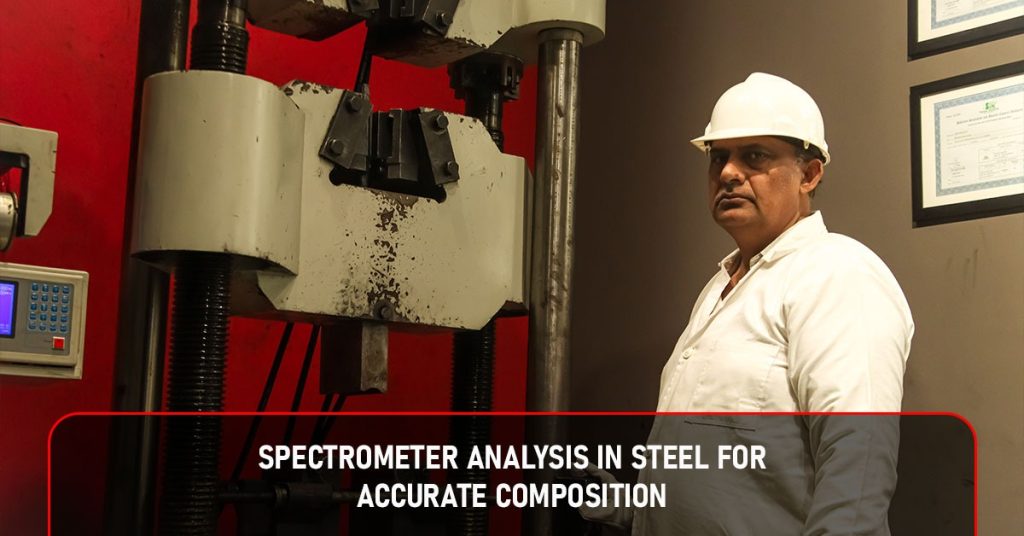
Steel looks strong and reliable from the outside. However, its real strength depends on what lies within. Even a slight change in its chemical makeup can affect how it performs under pressure. That is why builders and engineers cannot rely on appearance alone.
In many cases, construction issues start with poor material quality. Some steel may look perfect but fail to meet required standards. As a result, structures may lose strength over time. Therefore, relying only on supplier claims or visual checks is not enough. This is where proper steel composition testing becomes essential.
This is exactly where spectrometer analysis in steel plays a critical role. It helps identify the exact chemical elements present in steel with high accuracy. In simple terms, it ensures that the material meets safety and quality standards. In this blog, you will learn how this method works and why it is one of the most trusted steel quality testing methods today.
Spectrometer analysis in steel is a method used to check the exact chemical composition of steel. It identifies elements and measures their percentage, ensuring each batch meets required standards.
In simple terms, a spectrometer analyzes light emitted from a steel sample when exposed to energy. Each element shows a unique pattern. This allows accurate identification of elements like carbon, manganese, sulfur, and chromium. As a result, the chemical analysis of steel becomes precise and reliable.
Moreover, this method supports effective steel composition testing by providing exact data. It helps manufacturers maintain consistency and makes it a key part of modern steel quality testing methods.
Steel composition directly affects strength and durability. Even a small variation can change performance. For example, too much carbon makes steel brittle, while too little reduces strength. Therefore, accurate steel composition testing is essential for safe construction.
Poor composition can lead to cracks, bending, or failure under load. As a result, safety risks increase and repair costs rise. Moreover, inconsistent quality can delay projects. That is why builders rely on reliable steel quality testing methods.
Spectrometer analysis in steel ensures each batch meets standards. It also supports precise chemical analysis of steel, helping maintain consistency and reliability in critical structures.

Spectrometer analysis in steel follows a precise and fast process. First, a small sample is taken from the steel batch. Then, the surface is cleaned to remove impurities, as even minor contamination can affect results.
Next, the sample is placed in the spectrometer. The machine creates a high-energy spark on the surface. As a result, the elements in the steel emit light at unique wavelengths. The device reads this light and converts it into data. Therefore, spectrometer analysis in steel ensures accurate chemical analysis of steel without manual errors.
Moreover, the system compares results with set standards. This helps verify if the composition meets requirements. Because of this, it plays a key role in steel composition testing and quality control.
Key Steps in the Process:
In addition, the process is fast and repeatable. As a result, it improves efficiency and supports consistent steel quality.
In steel composition testing, identifying the right elements is critical for performance and safety. Even small changes can affect strength and durability. Therefore, spectrometer analysis in steel focuses on detecting both major and trace elements with high precision.
The chemical analysis of steel helps engineers understand how steel will perform in real conditions. It also helps detect impurities that may weaken the material. As a result, modern steel quality testing methods rely on accurate element detection to maintain consistent quality.
Key Elements Detected:
Therefore, accurate detection through spectrometer analysis in steel ensures safe and high-quality steel for construction.
Different steel quality testing methods are used to check performance. However, traditional methods like manual inspection and basic checks do not always give precise results. Therefore, they can create gaps in quality control.
In contrast, spectrometer analysis in steel provides fast and accurate results. It directly measures elements, reduces human error, and supports real-time decisions during production.
Manual testing can be slow and inconsistent. On the other hand, spectrometer testing is automated and repeatable. As a result, it ensures reliable steel composition testing across all batches.
Comparison with Other Methods:
Therefore, spectrometer analysis in steel is a more reliable and advanced solution for modern steel manufacturing.
Spectrometer analysis in steel has transformed how manufacturers ensure quality and consistency. It provides accurate data in real time. As a result, it supports better decision-making across production and quality control. Moreover, it reduces risks linked to poor material composition.
Accurate testing is critical in steel manufacturing. Even a small variation can change performance. Therefore, spectrometer testing helps detect exact element levels.
Maintaining uniform quality across batches is essential. However, manual checks may miss small variations. This is where spectrometer analysis in steel adds value.
Steel must meet strict national and international standards. Without proper testing, compliance becomes difficult.
Poor quality steel leads to rejection and rework. This increases costs and delays projects. Therefore, accurate testing helps control expenses.
In addition, spectrometer analysis in steel speeds up testing without compromising accuracy. Because of this, manufacturers can maintain high quality while improving output.

Pak Iron applies strict quality control measures to ensure every product meets industry standards. The company uses advanced spectrometer analysis in steel to verify chemical composition at multiple stages. As a result, customers receive steel that is consistent, reliable, and ready for real-world construction demands.
Modern equipment plays a key role in accurate testing. Therefore, Pak Iron uses high-precision spectrometers to maintain quality.
Quality is not checked once. Instead, it is monitored throughout the production cycle.
Meeting standards is essential for trust and safety. Therefore, Pak Iron ensures all products align with required benchmarks.
Choosing the right manufacturer directly impacts project success. Pak Iron focuses on long-term performance and reliability.
Because of these practices, Pak Iron stands out as a dependable choice. Their use of spectrometer analysis in steel ensures that every product delivers strength, precision, and confidence.
Steel quality depends on more than appearance. It relies on the exact balance of elements inside the material. Without proper testing, even strong-looking steel can fail under pressure. Therefore, accurate steel composition testing is essential for safe and reliable construction.
This is where spectrometer analysis in steel proves its value. It delivers precise and fast results. Moreover, it supports better quality control and ensures compliance with standards. As a result, manufacturers can maintain consistency and reduce risks. In addition, it strengthens the overall process of chemical analysis of steel, making it more reliable for modern projects.
If you want steel that meets quality and safety standards, choose a trusted supplier. Pak Iron uses advanced testing methods to ensure reliable performance in every batch. Contact Pak Iron today to get certified steel that supports long-term strength and durability in your projects.