

Safety in construction begins long before the first brick is laid. It starts with the strength and reliability of the materials that hold every structure together. In this process, Modern Steel Testing plays a crucial role. It ensures that each steel bar and beam meets the highest standards of strength, flexibility, and durability before reaching a construction site. In a country like Pakistan, where buildings must endure heat, humidity, and seismic stress, this testing is the foundation of real safety.
For decades, builders have trusted visual inspection or supplier assurance, but that approach is no longer enough. Without certified testing, even the smallest flaw in steel can lead to cracks, corrosion, or failure under pressure. The advancement of Modern Steel Testing now allows manufacturers to identify weaknesses early, verify composition, and deliver only steel that meets international standards. It’s precision and protection combined.
This blog explores how advanced testing transforms raw steel into a material builders can trust. From tensile and chemical tests to automation and traceability, you’ll discover how modern methods ensure every structure stands stronger, lasts longer, and delivers the safety Pakistan’s growing infrastructure demands.
Every structure depends on the reliability of its foundation, and that reliability begins with the strength of the steel within it. Through Modern Steel Testing, manufacturers ensure that each bar can bear heavy loads, resist environmental stress, and remain stable during extreme conditions. Testing is not just a quality check, it is a safety guarantee. It detects invisible flaws like cracks, weak yield points, or chemical inconsistencies that could otherwise go unnoticed until failure occurs on-site.
The process of Modern Steel Testing connects directly to real-world safety. When steel is tested for strength, ductility, and composition, engineers gain the confidence that it will perform under pressure, whether during an earthquake, in coastal humidity, or under constant urban load. This step transforms ordinary steel into a reliable component for long-lasting construction.
Key aspects covered in modern testing include:
By combining scientific accuracy with industrial standards, steel testing creates a chain of trust between the manufacturer, the builder, and the final structure — ensuring Pakistan’s buildings stay strong, safe, and secure for generations.
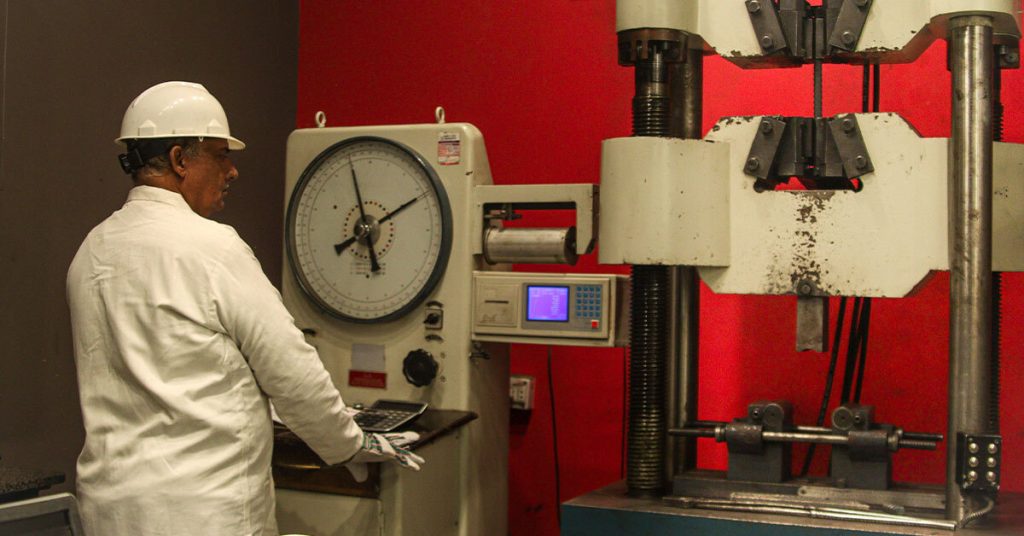
Modern construction demands more than strong materials, it requires verified strength, purity, and consistency. That’s why advanced steel testing methods form the backbone of every quality assurance process. These tests confirm that each bar meets the highest performance and safety standards before it reaches any construction site.
One of the most crucial lab testing for rebars involves tensile and bend tests. These evaluate how much force a steel bar can endure before breaking or permanently deforming.
Together, these tests simulate real-life stresses from building loads to seismic shifts ensuring the steel maintains both strength and ductility under extreme conditions.
In steel testing methods, chemical balance is critical. Using spectrometer analysis, engineers detect unwanted elements like sulfur, phosphorus, or carbon imbalances that could weaken the bar or accelerate corrosion.
This step guarantees that the steel will resist rust and degradation, especially in Pakistan’s humid and coastal climates.
With non-destructive steel testing, quality can be verified without damaging the product.
These methods ensure structural safety while maintaining the bar’s usability, offering engineers complete trust in the integrity of every steel product before it’s even installed.

At Pak Iron, we have built a robust system to ensure Modern Steel Testing is not just a promise but a daily practice within our mill. Our facility operates with continuous casting and Inductotherm furnaces (8-ton and 12-ton) to produce billets of uniform composition. The automated rebar mill, equipped with Siemens PLC controls and three-speed stands, maintains accuracy across every stage of production. These systems eliminate inconsistencies and guarantee steel with stable performance under high stress and extreme conditions.
Our in-house laboratory performs both mechanical and chemical testing to verify compliance with international standards. Each batch of steel is fully traceable through bundling, tagging, and batch coding systems. The 150-foot cooling bed and automated rotary shear ensure controlled temperature reduction, which enhances microstructure and prevents surface or internal defects. Every bar undergoes finishing through high-speed stands to achieve precise dimensions and superior durability.
By integrating Modern Steel Testing into every phase, Pak Iron delivers steel that meets the highest benchmarks of strength, safety, and dependability for construction projects across Pakistan.
Builders across Pakistan understand that every structure’s safety begins with the quality of its foundation materials. This is why Modern Steel Testing plays a vital role in today’s construction industry. Tested and certified rebars ensure that what goes into the concrete can perform under both everyday loads and extreme conditions such as heat, humidity, and seismic activity. Reliable steel gives builders confidence that their projects will stand strong for decades.
Certified steel produced through Modern Steel Testing not only meets industry benchmarks but also minimizes the chances of structural failure. Each test verifies that the bars possess consistent strength, flexibility, and resistance to corrosion. For builders, this means fewer risks, fewer repairs, and a stronger reputation for quality construction.
When developers choose steel that has been rigorously tested and certified, they aren’t just buying a product, they’re investing in safety, sustainability, and peace of mind for every structure they create.
The future of Pakistan’s construction industry is tied to how efficiently it adopts advanced testing technologies. With AI-driven systems and automated analysis, steel testing is moving toward predictive accuracy, identifying potential issues before production even begins. Smart data, machine learning, and digital traceability are helping manufacturers maintain consistent quality while reducing human error.
These innovations mean every batch of steel can be verified in real time, ensuring higher safety standards and improved reliability for critical infrastructure. Builders and developers who adopt such rigorously tested materials are setting new benchmarks for durability and trust.
Pakistan’s growing skyline depends on precision, not guesswork. Choosing tested steel from certified manufacturers ensures that every structure, from high-rises to bridges is built on proven strength. For builders looking to lead the future, investing in quality-tested steel today is the smartest step toward a safer tomorrow.
Every structure begins with trust and trust begins with quality. At Pak Iron, each bar of steel passes through advanced Modern Steel Testing processes to ensure unmatched safety, consistency, and durability. From tensile strength to chemical balance, every step is backed by automation, real-time monitoring, and internationally recognized standards.
Whether you’re developing high-rise towers, industrial plants, or infrastructure projects, our certified steel delivers reliability that lasts. We don’t just meet standards, we set them through precision testing and transparent traceability.
Partner with a team that puts safety first and innovation at the core. Choose Pak Iron’s certified steel for your next project and experience strength you can count on.
📞 Contact us today to discuss your steel requirements or request custom testing for guaranteed quality and compliance. Your project deserves nothing less than the best.
Modern Steel Testing is a set of advanced laboratory and non-destructive methods used to verify the quality, strength, and composition of steel. It ensures that every steel bar meets safety, performance, and durability standards for structural reliability.
Pak Iron uses tensile, bend, and spectrometer tests along with ultrasonic non-destructive testing. These processes confirm the steel’s flexibility, purity, and internal soundness — guaranteeing consistent quality for every batch.
Our products meet ISO standards and ASTM specifications, supported by in-house quality control and Siemens-based automation. Each product is traceable from furnace to final delivery.
Testing identifies hidden defects like cracks, weak points, or chemical imbalances before steel reaches the site. This prevents structural weaknesses, improving safety and long-term performance.
Yes. Pak Iron offers custom steel testing and certification support based on project requirements, including seismic zones, coastal conditions, and large-scale infrastructure projects.
Every batch undergoes multiple testing stages from molten steel analysis to post-rolling inspection ensuring precision, consistency, and full traceability at each step.
We combine automation, AI-driven monitoring, and advanced lab testing to maintain consistent quality. This integrated approach ensures that every steel bar is safe, strong, and built to last.